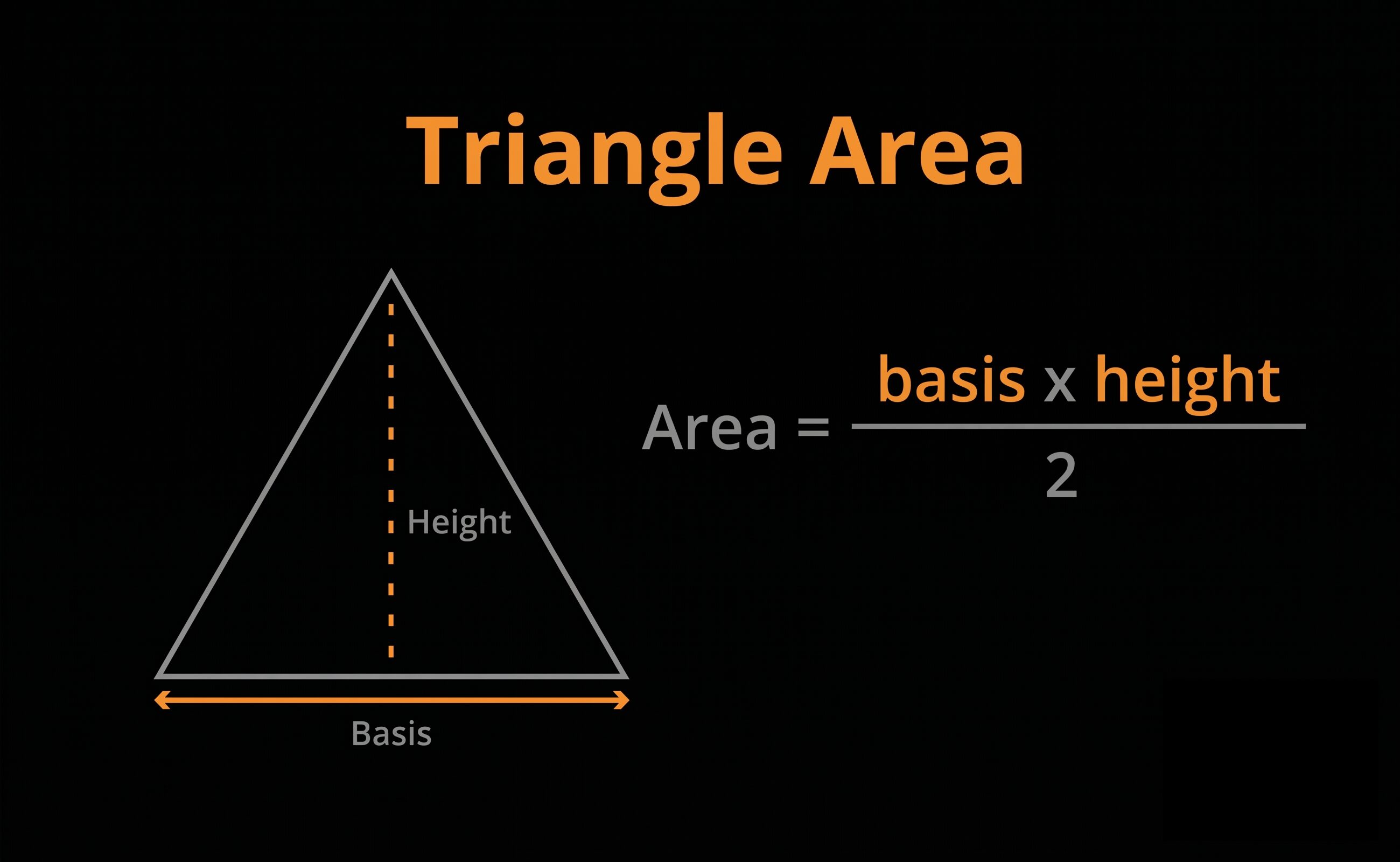
Our free area calculator helps you accurately determine the square footage of various spaces for planning and budgeting, including:
- Residential Buildings: Calculate the square footage of your house, garage, or outdoor shed for real estate or tax purposes.
- Home Improvement Projects: Precisely measure rooms for new flooring, carpeting, or tiling installation to avoid overbuying materials.
- Gardens and Landscaping: Find the total area of your lawn, flower beds, or patio to estimate sod, mulch, or pavers.
- Commercial Construction: Determine the site area or project footprint for professional building layouts.
How to Calculate Area for Irregular and Complex Rooms
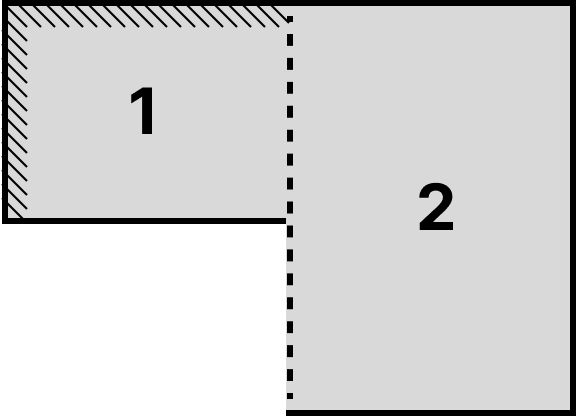
To find the total square footage of a complex room, split the space into two simple rectangles (as shown above). Use the formula $Area = Length \times Width$ for each section and add the results together.
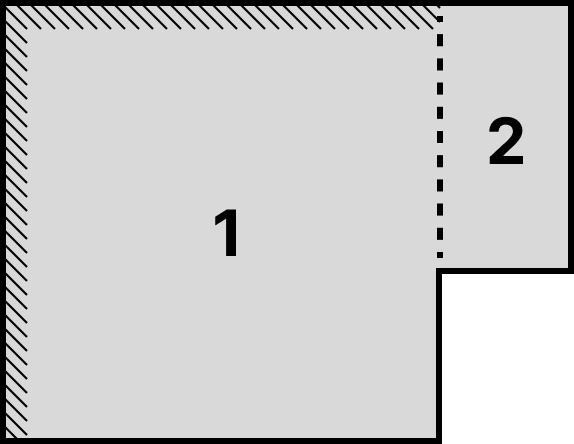
L-Shaped Rooms: This type of room layout has a “notch.” It is easily calculated by treating the space as two separate rectangular rooms and summing the areas.
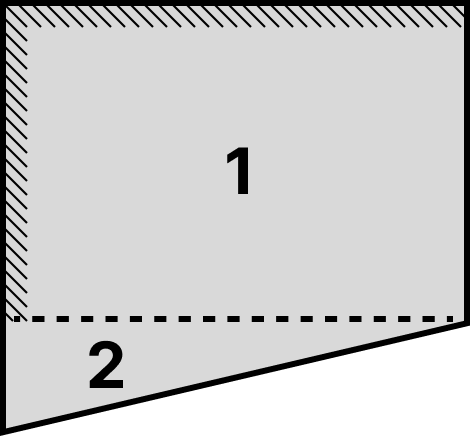
Slanted Walls: Measuring areas with angled surfaces is a bit more challenging. You can solve this by measuring the main “box” area first, then calculating the triangular area separately using $Area = \frac{Base \times Height}{2}$.
Viable Brand Tool Updates: Version 1.2 released February 23, 2025. We continuously improve our calculators for better accuracy and user experience.
Frequently Asked Questions (FAQ)
To calculate the square footage of a rectangular area, use the formula: Length (ft) × Width (ft) = Square Footage. If you are measuring in inches, divide the final total by 144 to get the square footage.
The easiest way to measure an L-shaped or “notched” room is to divide the space into two separate rectangles. Calculate the square footage of each rectangle individually, then add the two totals to get the final area.
It is a standard industry practice to buy 10% more material than your calculated square footage. This “waste factor” accounts for cutting, mistakes, and future repairs. For complex patterns like herringbone, you may want to increase this to 15%.
Yes. You can use this tool to determine the area of garden beds, lawns, or patios. Once you have the square footage, you can easily determine how much sod, mulch, or soil you need based on the depth required for your project.
For rooms with slanted or angled walls, treat the main rectangular area as one section and the triangular area as another.
The area of a triangle is calculated as (Base × Height) ÷ 2. Add this to your rectangular total.